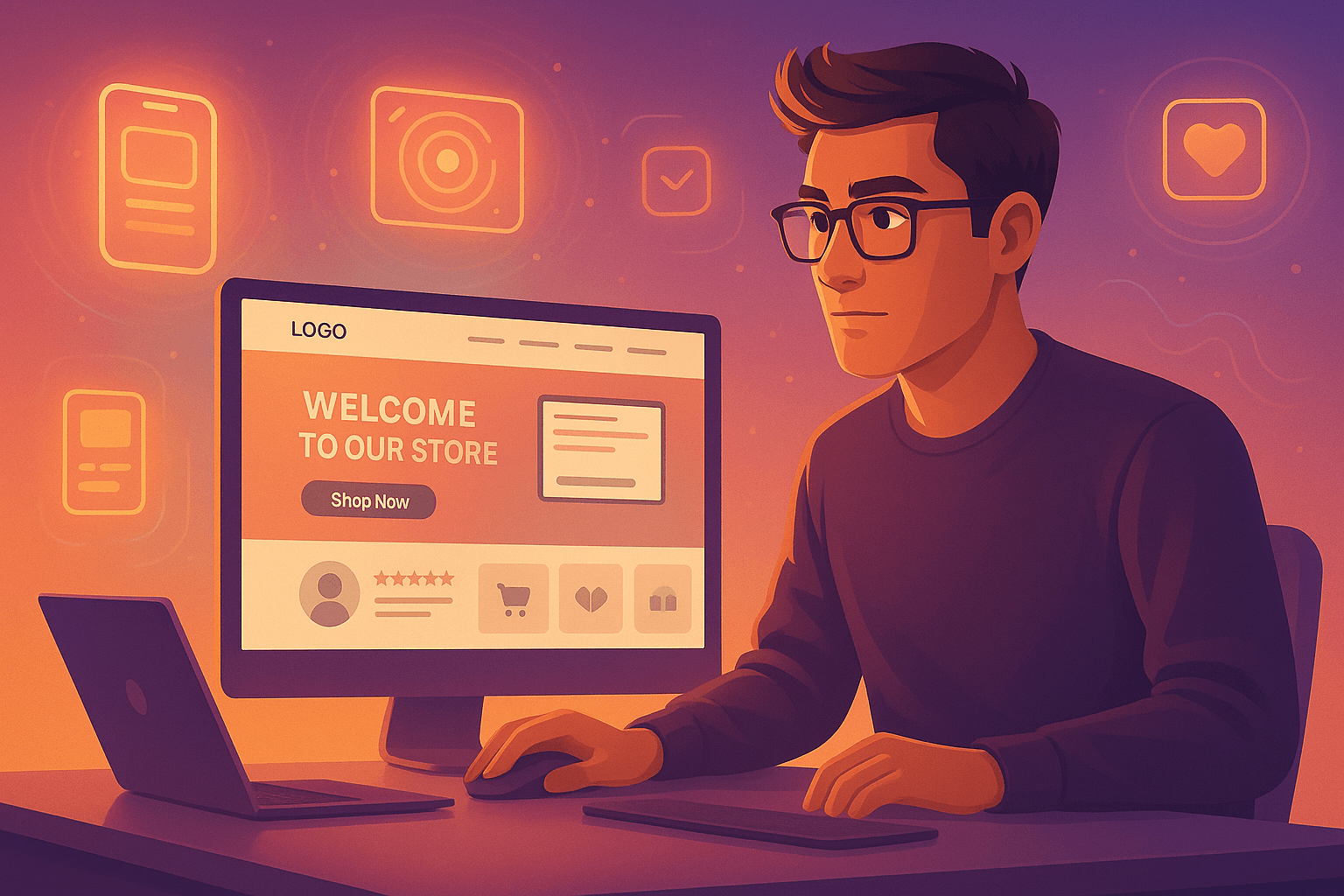
First impressions count, right? Especially online. Think about it: someone clicks onto your ecommerce website homepage. Boom. In seconds, they’re sizing you up. Do you look legit? Can they find what they need? Is it easy to use? That quick snapshot decides whether they stick around to buy or bail on your page.
Your ecommerce website homepage design? It’s not just window dressing. It’s your secret weapon to turn browsers into buyers. Picture a physical shop – you wouldn’t throw it together, would you? Your online storefront needs the same love and attention to pull people in, keep them hooked, and turn them into happy customers. According to Shopify’s research on ecommerce website designs, a well-designed homepage can significantly impact user engagement and sales. Want to know why your ecommerce homepage design is so important and, most importantly, how to optimize your online store homepage for user experience and conversions? Let’s get into it.
The Psychology Behind First Impressions
Ever wonder why people judge a website so fast? It all boils down to a few key things happening in their brains:
A. Visual Trust: How Design Influences User Trust and Credibility
In the online world, trust is everything. People can’t touch your products or meet your team. So, your ecommerce website homepage design needs to scream, “We’re legit!” A great-looking site instantly builds confidence. But a messy, amateurish design? It sends people running. Think about it: would you buy a fancy watch from a dingy store with bad lighting? Nope. Same rules apply online.
Good visuals, a solid brand look, and a clean layout show you care. It proves you’ve invested in your business and want to give customers a great experience. Research from Forbes shows that prioritizing user experience in your ecommerce website design directly impacts customer trust and conversion rates.
B. Cognitive Load: Why Simplicity and Clarity Win Attention
Cognitive load? That’s basically how much brainpower it takes to understand something. A confusing homepage cranks up cognitive load, making it hard for people to find what they want. And when folks get overwhelmed, they bounce.
That’s why simple is best when you design ecommerce website homepages. A clean, easy design lets people quickly see what you offer and find what they need. Use clear headlines, short descriptions, and plenty of white space to make things easy on the eyes. Don’t throw everything at them at once; guide them through with smart design choices.
C. Emotional Resonance: How Homepage Visuals and Copy Trigger Feelings That Lead to Action
It’s not all about logic. Emotions play a HUGE part in buying decisions. Your homepage should spark the right feelings, ones that match your brand and your products. This means choosing visuals, writing copy, and creating an overall vibe that clicks with your target audience.
Selling eco-friendly stuff? Use natural colors, nature pics, and words about sustainability. Got a luxury brand? Think elegant fonts, high-quality photos, and a sophisticated feel. The goal is to make people feel something when they land on your ecommerce website homepage design.
Homepage Design and Its Direct Impact on Conversions
Your homepage? Yeah, it’s a big deal. It’s often the first thing people see, and that first impression can make or break your conversion rates. If you want to optimize your online store homepage for user experience and conversions, pay special attention to these elements:
A. Above-the-Fold Real Estate
“Above the fold” is what you see without scrolling. This prime real estate needs to grab attention and communicate your message fast.
What needs to be front and center right away on your ecommerce website homepage design?
•Your Value: What makes you special? Why should people buy from YOU? Tell them, quick and clear.
•A Killer Headline: Make it catchy! Speak directly to what your target audience wants or needs.
•A Call to Action (CTA): Tell people what to DO! “Shop Now,” “Learn More,” “Sign Up”, make it obvious, eye-catching, and persuasive.
•Stunning Visuals: Show off your products and your brand with amazing photos and videos.
B. Navigation Clarity
Imagine walking into a mega-store and having no clue where to even begin. Annoying, right? That’s how people feel with bad navigation. Clear, easy-to-use navigation is key to getting people where they want to go on your ecommerce website.
A good menu helps people browse categories, find specific items, and learn about your company (About Us, Contact, Shipping, etc.). The smoother the journey, the more engaged they’ll be, and the less likely they’ll bounce. Plain and simple: make it easy for customers to find something, or they’ll shop elsewhere. According to Onilab’s eCommerce homepage UX best practices, intuitive navigation is one of the most critical factors in creating a good ecommerce website that converts visitors into customers.
C. Mobile Responsiveness
In today’s world, if your ecommerce website homepage design isn’t mobile-friendly, you’re missing out. Your homepage NEEDS to look and work great on phones, tablets, and everything in between. A bad mobile experience leads to frustration, high bounce rates, and lost sales.
Mobile responsiveness means your site automatically adjusts to fit the screen. Fonts, images, layouts, everything adapts. Buttons need to be easy to tap, and navigation needs to be touch-friendly. Make sure everyone has a great experience, no matter how they’re browsing.
For more insights on creating a mobile-friendly online store, check out our guide on how to make a no-code online shop that works beautifully on all devices.
Key Metrics Affected by Poor Homepage Design
A bad ecommerce website homepage design can mess with your bottom line in a lot of ways.
• Bounce Rate: This is the percentage of people who leave your site after viewing only one page (usually the homepage). A high bounce rate means your homepage isn’t grabbing their attention or meeting their needs.
• Session Duration: How long people spend on your site. Short sessions mean people aren’t finding what they’re looking for, or your site just isn’t interesting enough.
• Cart Abandonment Rate: The percentage of people who add stuff to their cart but don’t check out. Lots of things cause this, but a confusing or untrustworthy homepage can definitely be a factor. If they can’t find what they want or don’t trust your site, they won’t buy.
•Conversion Rate: The percentage of visitors who complete a desired action, like making a purchase. A low conversion rate means your ecommerce website homepage design isn’t doing its job of turning visitors into customers.
Essential Elements of a High-Converting Ecommerce Homepage
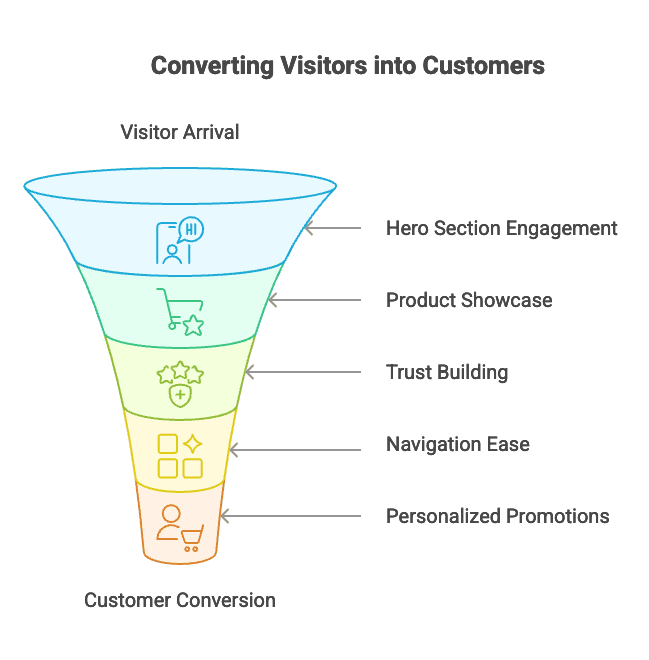
Want a homepage that actually converts? Make sure you include these elements to attract, engage, and persuade visitors when you design ecommerce website homepages:
A. Hero Section with a Strong CTA
This is the first thing people see. Make it count! Use your best headline, a quick summary of what you offer, and a stunning visual (photo or video). Most importantly, include a clear CTA button: “Shop Now,” “Learn More,” “Get Started,” etc. Choose one that aligns with your goals.
B. Featured Products or Categories
Show people what they could be buying! Highlight your best-selling products with great photos and short descriptions. Consider using a product carousel or slider to show off a variety of items without overwhelming people. Organize featured products by things like season or promotion.
C. Social Proof (Reviews, Testimonials, Trust Badges)
Build trust with social proof. Show off customer reviews and ratings. Display security badges from trusted payment processors to reassure visitors that your site is safe.
D. Clear Navigation/Menu
Make it easy for people to find stuff! Use clear, descriptive menu titles and organize them into logical categories. Keep the navigation consistent across your ecommerce website. This is a fundamental aspect of creating a good ecommerce website that users can navigate intuitively.
E. Personalized Promotions or Dynamic Banners
Show people content that’s relevant to them based on their browsing history or preferences. Display targeted product recommendations. Personalization increases engagement and conversions, making your ecommerce website homepage design more effective at driving sales.
Actionable Tips to Improve Your Homepage Today
Fixing up your ecommerce website homepage doesn’t have to be a massive project. Here are some things you can do today to optimize your online store homepage for user experience and conversions:
•Use Heatmaps or Analytics to Test User Behavior: These tools show you how people are actually using your homepage. See where they click (or don’t click!), what they look at, and how far down they scroll. Use this data to optimize your design and content placement, especially your calls to action.
•Prioritize Mobile-First Design: Most people are browsing on their phones. Design for mobile first, then adapt for desktop. Test your site on different devices to make sure everything works flawlessly.
•Run A/B Tests on CTAs and Layouts: A/B testing lets you test different versions of your homepage to see what performs best. Try changing your headlines, CTAs, images, and overall layouts. Continuously test and optimize for maximum conversions.
•Refresh Visuals and Messaging Seasonally: Keep things fresh by updating your photos, offers, and promotions regularly. This keeps people interested and encourages repeat visits.
Conclusion
Your ecommerce website homepage design is way more than just a pretty picture. It’s a strategic tool that you can use to attract visitors and turn them into loyal customers. From building trust through design to communicating your message with clarity, every element plays a role in shaping the user experience and driving conversions.
💻 Your homepage is just one piece of the puzzle, check out our full step-by-step guide on building an effective ecommerce website to make sure the rest of your store performs too.
Understand those first impressions, prioritize mobile users, and put some actionable strategies into play. A well-designed ecommerce website homepage will drive results coupled with amazing presentation.
Take the time to audit your homepage and make sure it represents your brand, provides solutions to customer questions, and makes customers want to keep looking. If you’re not sure where to start with your ecommerce website homepage design, don’t hesitate to reach out. Raya Tech can help you create an ecommerce website that’s optimized for conversions. Our team of experts can help transform your homepage into one of your business’s most powerful conversion tools.